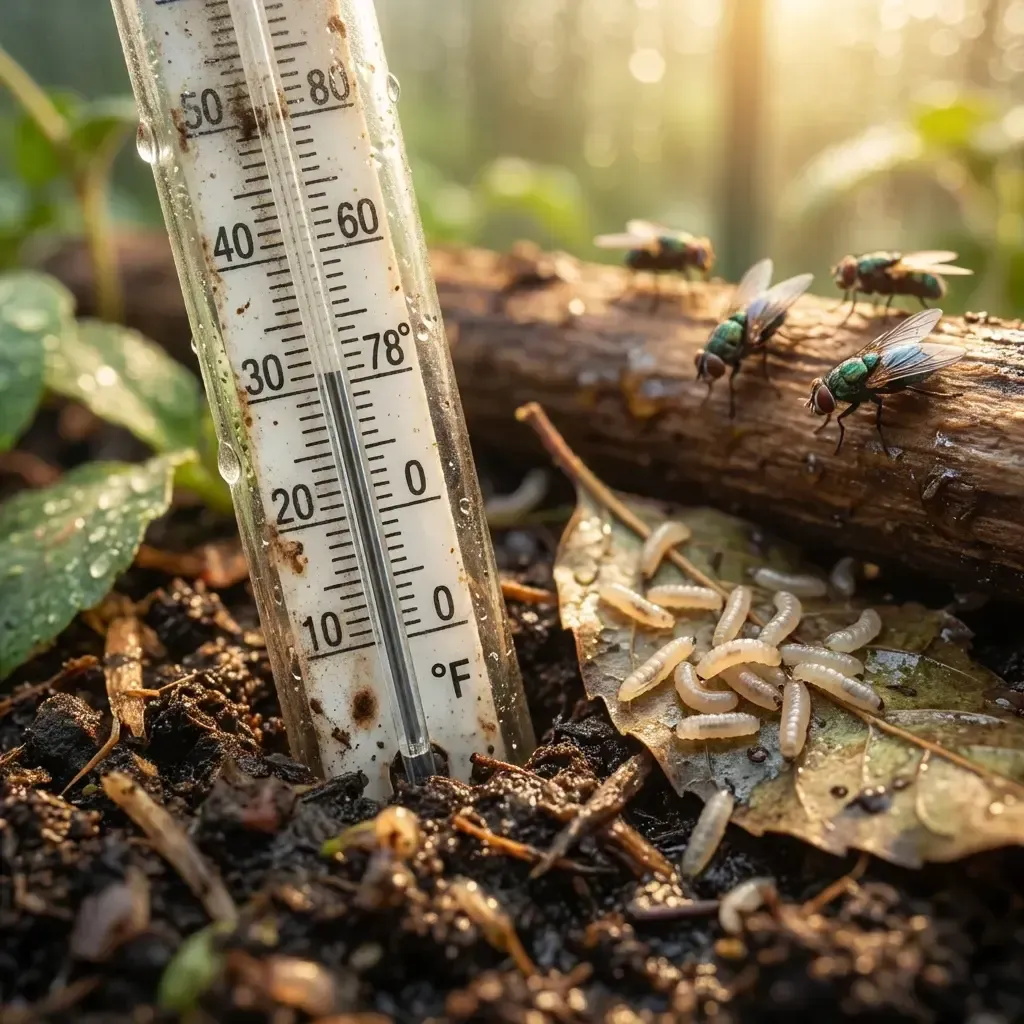
Why Warm Weather Triggers Explosive Fly Population Growth
Why Warm Weather Triggers Explosive Fly Population Growth
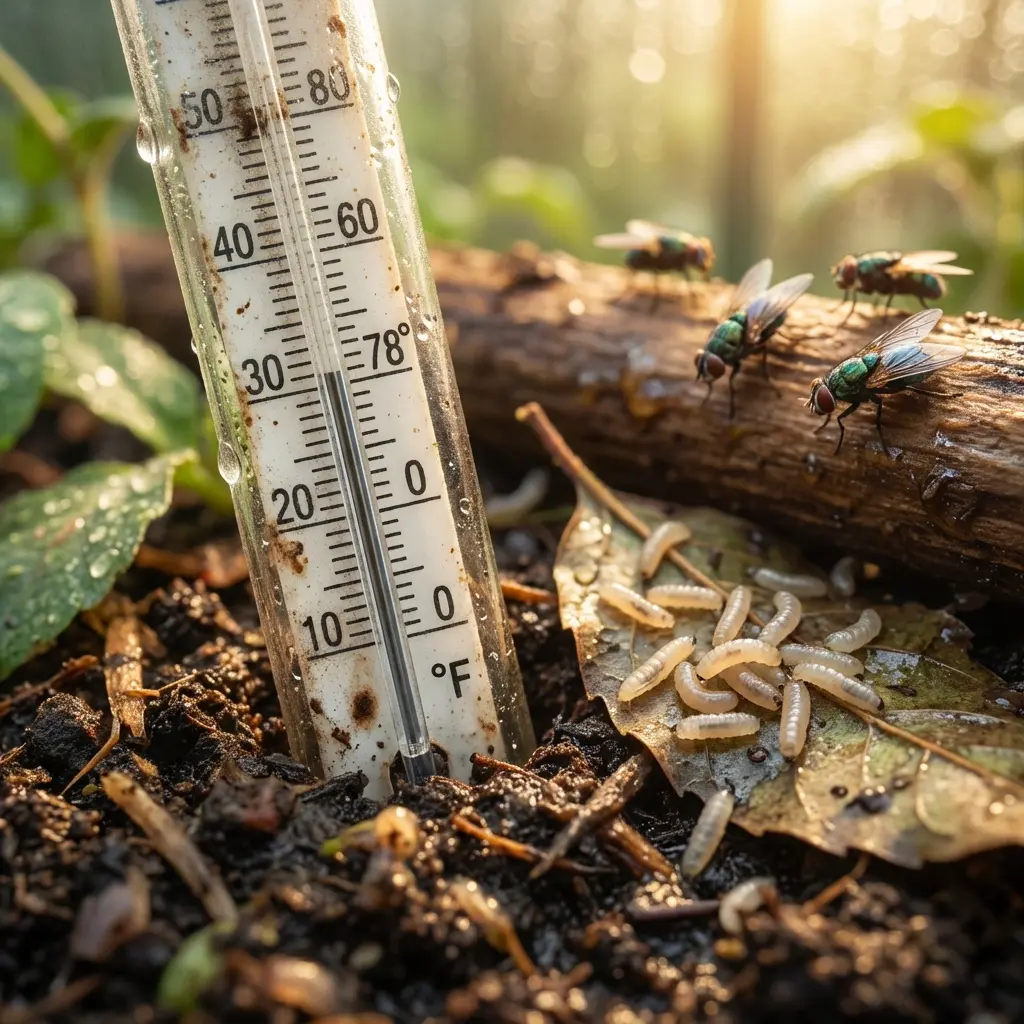
When temperatures climb into the seventies and eighties, fly populations don't just increase gradually. They explode.
The difference between a few annoying flies and a full-blown infestation often comes down to just a few degrees on the thermometer. Understanding the biological mechanisms behind this temperature-driven population surge can help you predict when fly activity will spike and take action before the problem becomes overwhelming.
The Temperature Threshold That Changes Everything

Fly development follows a predictable pattern tied directly to environmental temperature. Below the mid-sixties, egg development and larval growth crawl along because the enzymes regulating metabolism and cell division aren't operating efficiently.
Once temperatures consistently move past 65°F and into the low to mid-seventies, everything accelerates.
The biological processes speed up significantly. Metabolic activity increases. The fly's nervous and digestive systems begin functioning more rapidly. Larvae consume nutrients faster, molt more quickly, and transition through growth stages in a fraction of the time.
The numbers tell the story:
At 66°F: Egg to adult development takes approximately 627 hours (26 days)
At 77°F: Development compresses to about 297 hours (12 days)
Development happens more than twice as fast once you move from the mid-sixties into the mid-seventies.
When you account for the short period after adult emergence before females begin laying eggs—typically a few days up to roughly a week—the practical egg-to-egg cycle looks like this:
Cooler conditions (65°F): About 30 days
Warmer conditions (75°F): Roughly 15 to 18 days
How Generation Time Creates Population Explosions

Over a typical 120-day summer season, that development speed difference translates into dramatically different population outcomes.
At cooler temperatures, you get roughly 4 generations. At warmer temperatures, you get about 7 to 8 generations.
Each generation compounds the next.
Start with 100 female flies. Each one lays around 500 eggs over her lifetime. About half develop into females. That's roughly 250 new females per original female per generation under favorable conditions.
After one generation: Those 100 females produce about 25,000 female offspring.
After 4 generations (cooler weather): The population compounds to roughly 6.25 million females if survival rates stay consistent.
After 8 generations (warmer weather): That same starting population could theoretically grow into trillions of females through repeated multiplication.
This is why fly infestations can escalate so quickly once temperatures remain consistently warm. The population curve steepens dramatically as generation time shortens.
Why Real-World Numbers Don't Match Laboratory Predictions

Those theoretical numbers sound staggering because they are. But real-world conditions prevent populations from reaching those extreme levels.
In controlled laboratory settings where temperature, humidity, and food sources are stable and predators are absent, survival from egg to adult can range from 70 to 90 percent.
In real-world outdoor conditions, that survival rate drops to somewhere between 2 and 10 percent.
The limiting factors:
Moisture levels in breeding material dry out or become oversaturated, preventing larvae from feeding properly
Temperature swings slow or halt metabolic processes during critical growth stages
Natural predators like beetles, mites, and parasitic wasps target eggs and larvae
Microbial competition within manure or organic waste reduces nutrient availability
Physical disturbances like turning compost, cleaning animal bedding, or removing debris break the life cycle
These environmental pressures collectively prevent most eggs from reaching adulthood. But enough typically survive to allow infestations to escalate quickly if breeding sites are left unmanaged.
The Heat and Moisture Connection

Warm weather alone speeds up fly metabolism and shortens development time. But the combination of heat and moisture creates the conditions needed for a true population surge.
Fly eggs and larvae depend on organic material that stays damp enough to support feeding and movement. Their bodies lose moisture quickly. They can't survive in dry environments for long.
When temperatures rise into the ideal developmental range and humidity or surface moisture keeps breeding material from drying out, microbial activity increases. This breaks down material like manure, garbage, or yard waste into nutrients that larvae can consume.
That process generates both heat and odor.
The odor attracts more adult flies to lay eggs in the same area, reinforcing the cycle.
Without adequate moisture, even warm conditions limit larval survival. Eggs may desiccate before hatching. Feeding material may harden beyond what larvae can penetrate.
The pairing of sustained warmth with damp organic matter allows multiple generations to develop rapidly in the same breeding site. This is why infestations often follow periods of warm weather combined with rainfall or irrigation rather than heat alone.
From Contamination to Fly Factory in One Week

Under favorable summer conditions, a breeding site can begin producing adult flies surprisingly quickly once organic material is deposited and stays moist.
Adult flies are attracted to fresh waste or decaying matter within hours because of the odors released during early microbial breakdown. Females may begin laying eggs the same day if the surface is suitable.
The timeline:
Egg hatching: 8 to 24 hours when temperatures are consistently warm
Larval stage: Around 3 to 5 days as they feed and grow
Pupal stage: Another 3 to 6 days depending on temperature and moisture
In total, a site can go from fresh organic contamination to producing new adult flies in roughly 7 to 10 days during peak warm and humid weather.
Once those adults emerge, they can begin laying eggs of their own within just a few days. The site rapidly transitions into a continuous source of new flies if left unmanaged.
The Optimal Temperature Range

As temperatures climb into the eighties, fly development continues to speed up. But only up to a point.
There's a biological sweet spot where growth and survival are both optimized. For common houseflies, that ideal range falls somewhere between about 80 and 90 degrees Fahrenheit.
In this range, egg hatching, larval feeding, and pupal development can all occur at their fastest sustainable rates. The full egg-to-adult cycle can complete in as little as 7 to 10 days under moist conditions.
Once temperatures begin pushing into the mid to upper nineties and beyond, development may still happen quickly but survival rates often start to drop.
Why extreme heat reduces populations:
Larvae become more vulnerable to dehydration
Breeding material dries out too fast to support feeding
Extremely high heat disrupts enzyme activity
Developing pupae experience stress, reducing successful maturation
Hotter weather doesn't always mean faster population growth. While development time may shorten slightly, overall reproduction can actually slow if too many larvae fail to survive.
The fastest population expansion typically occurs in that warm but not extreme temperature window where both development speed and survival rates remain high.
What Happens When Temperatures Drop

Once temperatures begin dropping below the mid-sixties, fly development slows significantly. The metabolic processes that drive growth and molting are temperature dependent. As conditions cool, those biological reactions begin operating less efficiently.
Around the mid-fifties, development becomes very sluggish. Egg-to-adult timelines can stretch well beyond a month.
At or below roughly 50°F, most development essentially stops. Larvae are no longer able to feed or grow at a meaningful rate. Adult flies may still survive for short periods in sheltered environments, but reproductive activity is greatly reduced or halted altogether.
To make it through cooler months, many flies overwinter in protected spaces like barns, wall voids, attics, or under organic debris where temperatures remain more stable. They enter a dormant state that slows their metabolism until conditions improve.
Pupae in particular are well adapted to surviving cold snaps. Their protective casing helps insulate them from rapid temperature changes.
Once warmer weather returns and temperatures climb back into a suitable range, these overwintering individuals can resume development or begin laying eggs. This is why fly populations often rebound quickly in early spring if breeding sites are available.
The Critical Spring Window

When overwintering flies begin emerging in early spring and temperatures start climbing back into the sixties, population growth can accelerate much faster than most people expect.
You're starting with adults that are already capable of laying eggs rather than waiting for a new life cycle to begin from scratch.
Once daytime temperatures consistently reach the mid-sixties to low seventies, those survivors can begin reproducing within a few days. Their first generation may develop in roughly three to four weeks under moderate spring conditions.
That initial generation then lays the groundwork for a second wave that develops even faster as temperatures continue rising. This is why populations often appear to jump suddenly in late spring rather than growing gradually.
The most critical window for intervention falls in early spring when overwintering adults first become active but before the first full generation has matured.
Treating breeding sites or interrupting the life cycle at this stage can prevent the population from compounding into the larger summer infestations that are much harder to manage once multiple generations are already present.
Species Variations in Temperature Response

The general pattern of faster development in warmer temperatures applies across most common fly species. But there are meaningful differences in how each one responds once conditions start heating up.
Blow flies tend to develop well in slightly cooler conditions than houseflies. They're often among the first to become active in early spring because their larvae can tolerate lower temperatures in decaying organic material.
Fruit flies usually have an even shorter life cycle than houseflies. They can complete development rapidly in warm indoor environments where moisture and fermenting food sources are present, sometimes in as little as a week when temperatures are ideal.
Stable flies, which are more commonly associated with livestock environments, also respond strongly to warm and moist breeding material. But they may require specific substrates like soiled bedding or manure mixed with feed waste to support larval growth.
While all of these species benefit from sustained warmth combined with moisture, their optimal development ranges and breeding preferences vary slightly. This influences how early in the season they appear and how quickly their populations expand once favorable conditions are established.
Why Some Properties Get Hit Harder

Severe fly infestations usually come down to whether a property offers the right combination of warmth, moisture, and undisturbed organic material that allows breeding sites to persist long enough for multiple generations to develop.
High-risk property features:
Compost piles
Pet waste areas
Livestock pens
Damp mulch beds
Clogged gutters
Poorly drained soil
Garbage storage that stays warm and moist
Shade can also play a role by slowing evaporation and helping breeding material retain moisture even during hot weather.
In contrast, neighboring homes that manage waste more frequently, maintain better drainage, or allow surfaces to dry out between rainfall or irrigation may not support the same level of larval survival.
Small differences matter. How often trash bins are cleaned. Whether yard debris is removed promptly. How close animal areas are to living spaces. These factors influence how attractive a site becomes to adult flies looking for a place to lay eggs.
These localized environmental factors explain why one property might experience recurring infestations while another nearby sees only occasional fly activity despite sharing similar weather conditions.
The Counterintuitive Finding About Extreme Heat

One of the most counterintuitive findings in fly population research challenges what most people assume about fly infestations in warm weather.
Extremely hot weather can actually reduce fly population growth rather than accelerate it.
While warm temperatures in the seventies and eighties tend to speed up development and shorten generation time, sustained heat in the nineties or above can lower survival rates. Breeding material dries out more quickly. Larvae are more prone to dehydration before they complete development.
In some cases, microbial activity within organic matter also declines when moisture evaporates too rapidly. This reduces the nutrient availability that larvae depend on for growth.
A stretch of moderate warmth combined with humidity can produce a much larger population increase than a hotter but drier period.
The research suggests it's not just temperature alone but the balance between warmth and moisture that determines how quickly infestations expand. This is why fly problems often worsen after warm rainy periods rather than during the hottest and driest parts of summer.
Weather Patterns That Predict Population Surges
There are specific weather patterns that tend to signal when fly populations are about to ramp up, often before you see a noticeable increase in adult activity.
The biggest indicator: A stretch of several days where daytime temperatures stay consistently in the seventies or low eighties following rainfall or irrigation. That combination creates the damp organic conditions needed for eggs to hatch and larvae to feed successfully.
Rising overnight temperatures can also play a role. Warmer nights prevent breeding material from cooling or drying out, allowing development to continue around the clock.
High humidity levels after storms, especially when followed by calm winds and partial sun, often create the ideal environment for microbial breakdown. This attracts egg-laying adults within hours.
If these conditions persist for a week or more, there's a strong likelihood that breeding sites are already producing larvae that will emerge as adults in the following days.
Watching for this pattern of warm temperatures paired with recent moisture can provide an early warning that it's time to address potential breeding areas before the first new generation becomes visible around the property.
Climate Shifts and Extended Breeding Seasons

As warm seasons begin earlier in the spring and stretch later into the fall, one of the biggest changes in fly population dynamics is the potential for an extra generation or two to develop within what used to be a more limited breeding window.
Historically, cooler spring temperatures delayed the emergence of overwintering adults and slowed early reproduction. But milder conditions are now allowing flies to become active sooner and begin laying eggs earlier in the season.
More frequent swings between rainfall and warm weather can create repeated periods of ideal moisture in breeding material. This supports continuous larval development instead of isolated population spikes.
In some areas, extended fall warmth is also allowing flies to remain active well past the point when colder temperatures would have previously slowed reproduction.
These shifts can result in longer periods of sustained activity rather than a single midsummer peak. Infestations may feel more persistent from year to year and require earlier and more consistent management to keep populations under control.
Taking Action Before Populations Explode

Understanding the temperature and moisture dynamics that drive fly population growth gives you a predictable framework for intervention.
The most effective approach focuses on breaking the breeding cycle before multiple generations compound into overwhelming numbers.
Key action points:
Monitor weather patterns for the combination of 70-80°F temperatures following rainfall
Address potential breeding sites in early spring before overwintering adults establish the first generation
Manage organic waste frequently to prevent sites from remaining productive for 7-10 day development cycles
Improve drainage and reduce moisture retention in areas where flies typically breed
Pay attention to shade patterns that may keep breeding material damp longer than expected
The difference between a manageable fly presence and a severe infestation often comes down to timing. Acting when populations are still building prevents the exponential growth that makes control difficult once multiple generations are actively reproducing.
Temperature drives the timeline. Moisture creates the opportunity. Your intervention determines the outcome.
