
When Geometry Beat Chemistry in Fly Control
When Geometry Beat Chemistry in Fly Control

We got sold a lie about pest control.
For decades, the industry convinced us that the only way to deal with flies was to spray them into oblivion. Chemical companies built billion-dollar empires on the promise that their latest formula would finally solve the problem. Facility managers signed recurring contracts. Technicians showed up weekly with respirators and pressurized tanks. Everyone felt like they were doing something.
But here's what nobody told you: the flies were getting stronger while the chemicals were getting weaker.
As early as 1947—just one year after DDT hit the market—researchers started documenting something alarming. Houseflies and mosquitoes were evolving to survive the very chemicals designed to kill them. What worked at 99% efficacy on Monday became a "flavored snack" for pests by the following month.
The data is staggering. Studies show a 331-fold increase in insecticide resistance after just five generations of exposure. Some strains developed resistance ratios exceeding 4,419-fold after only 27 generations.
You're watching your solution become the problem in real time.
The Three-Headed Monster Nobody Talks About
The shift away from chemicals didn't start with some lab breakthrough. It started with a crisis the industry tried to ignore: the "Three-Headed Monster" of the 1950s.
Pesticide resistance. Flies were literally coding around the chemicals through genetic mutations.
Secondary pest outbreaks. Killing one pest created space for another to thrive.
Bioaccumulation. Toxins were building up in environments, animals, and people.
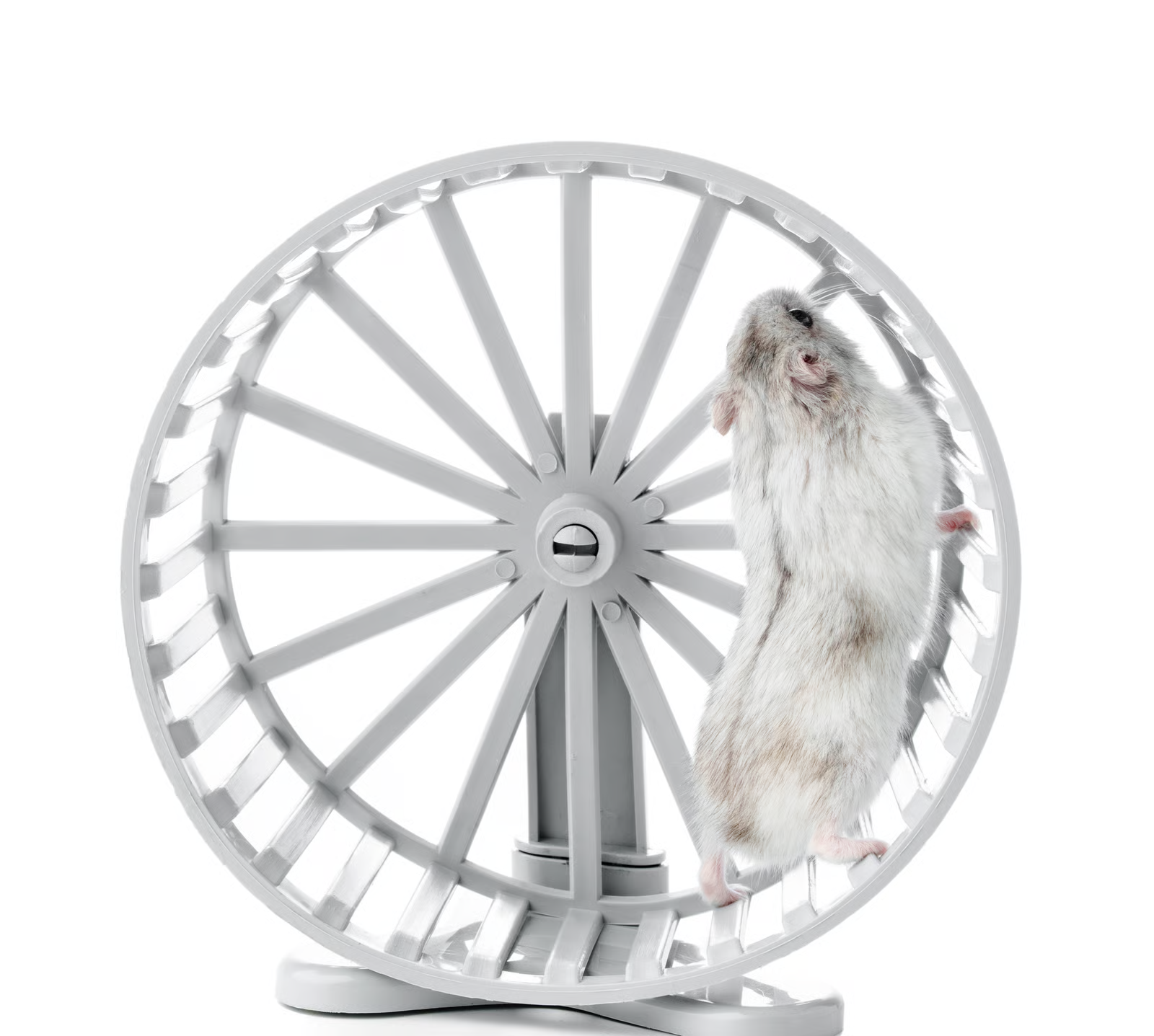
This forced professionals onto what became known as the "pesticide treadmill"—using increasingly toxic doses just to maintain basic control. The chemicals were a reactive solution that ultimately made the problem stronger.
Meanwhile, something quieter was happening. A handful of researchers started looking backward instead of forward. They asked a simple question: How did people control flies before synthetic chemicals existed?
The Forgotten Discipline of Biological Architecture

Before chemicals became the default, pest control was a discipline of biological architecture. Professionals didn't just look for ways to kill flies. They looked at how a building's geometry could be used as a weapon.
They understood something fundamental: a fly's behavior isn't random. It's a series of predictable mechanical responses to light, airflow, and gravity.
Early practitioners used three geometric principles that modern research is now validating:
The "Lume-Tension" Principle: Flies are naturally drawn to the highest point of an illuminance gradient—the tension where light meets deep shadow. Old-school experts designed windows with specific deep-set "light traps" that funneled flies into collection voids where they couldn't navigate back out.
The "Passive Vortex" Effect: Before high-speed air curtains, buildings used passive cross-ventilation and specific door placements to create low-pressure zones. Strong, consistent air currents disperse the male swarms that congregate at head height. By shaping entryways to naturally accelerate air, they created a physical wall that a fly's limited 4.5 mph flight speed simply couldn't penetrate.
The "Inverted Cone" Logic: One of the oldest mechanical designs exploits the fly's tendency to fly upward when it hits a barrier. By placing the entry at the bottom of a wide cone that narrows at the top, they used the insect's own escape instinct to guide it into what Darwin called a "horrid prison"—without a single moving part or chemical drop.
These professionals knew you don't need to change the fly's biology if you can control the geometry of its environment.
They baked the expertise into the structure by ensuring that the natural path of least resistance for the fly led directly into a containment zone.
Too Simple to Be Stupid

Here's the fundamental difference between chemical and mechanical approaches.
A chemical requires the insect's internal nervous system to be vulnerable to a specific molecular compound. That vulnerability can be coded around through genetic resistance. The pest evolves. Your solution fails.
A passive structural trap targets the primitive, hardwired instincts of the fly—like its attraction to specific ultraviolet light wavelengths in the 365-395 nm spectrum.
A fly cannot decide to stop being attracted to light any more than a human can decide to stop needing oxygen.
The trap remains effective regardless of how many generations of insects pass through your facility. This mechanical certainty eliminates the human error of improper mixing or the environmental degradation of a spray. You're replacing a volatile and temporary solution with a permanent structural barrier.
By using the geometry of the trap to catch and contain the pest in a specialized glue board or a targeted airflow zone, you're essentially baking the expertise of a master technician into the physical frame of the building.
Research confirms what old-school practitioners knew intuitively. UV traps with enclosed glue boards are 70% more effective indoors than chemical sprays or zappers. Modern UV-LED systems maintain 95% effectiveness over 12 months, while chemical resistance develops in just 8-12 weeks.
The Chaos Tax
The moment of realization usually hits during a mid-summer heatwave.
A facility manager realizes they're paying for a premium weekly spray service, yet the fly count is actually increasing. The chemical treadmill fails because the local pest population has hit that 331-fold resistance threshold. The knockdown effect that used to last seven days now barely lasts six hours.
For a small business, this looks like a $2,000 monthly invoice for "advanced treatments" that results in a failed health inspection or a customer complaint about a fly in their soup.
The solution has become a recurring expense with zero ROI.
They're trapped in a cycle where they must buy more specialized, expensive toxins to kill the same number of insects that a simple $150 UV trap would have caught 24/7 without any drama.
The true tax isn't just the cost of the chemicals. It's the invisible drain of lost reputation and the constant firefighting mentality that keeps staff focused on the pest instead of the production line.
We call this the "chaos tax."
By switching to passive structural traps, you stop paying this tax. You invest in the building's own geometry instead—effectively firing the chemicals and replacing them with a one-time mechanical barrier.
Effort Doesn't Equal Efficacy
The biggest mental barrier for business owners making the switch is simple: they believe that if you aren't actively fighting the problem with a visible, smelly, recurring application, you aren't actually doing anything.
For twenty years, these owners have associated the chemical scent of a fresh spray with a job well done. Switching to a silent LED unit or a tapered structural trap feels like giving up because the solution doesn't require a technician in a respirator.
They view the chemical as an active soldier and the geometry as a lazy bystander.
They're failing to realize that the chemical is a fading resource while the geometry is a permanent physical law.
This is the same trap entrepreneurs fall into in other areas—thinking they need to constantly hustle instead of building systems that work while they sleep.
The Reclamation of Attention

When facility managers finally make the switch, the first thing they notice surprises them.
It's not the fly count. It's not even the cost savings.
It's the reclamation of their own attention.
For years, their pest control was a mental tab that never closed. Checking for the technician. Worrying about the smell before a big audit. Reacting to every single fly as if it were a personal failure of the latest spray.
When the passive traps go in, that hustle suddenly stops.
The manager realizes they haven't thought about an insect in three weeks because the geometry of the building is now doing the thinking for them.
The second surprise is the granularity of the data they suddenly have access to. A chemical spray is a black box that kills and disappears. But a glue board or a collection chamber is a physical ledger of every entry point and flight path in the facility.
Instead of guessing where the problem is, the owner can look at a trap near the loading dock versus one near the kitchen and see exactly where the defensive line is being pressured.
This shift from warfare to management transforms the pest problem from an emotional, high-stress crisis into a boring, predictable maintenance task that takes five minutes a month to verify.
They stop being hunters and start being system administrators.
The $500 Repair That Eliminates the $2,000 Headache
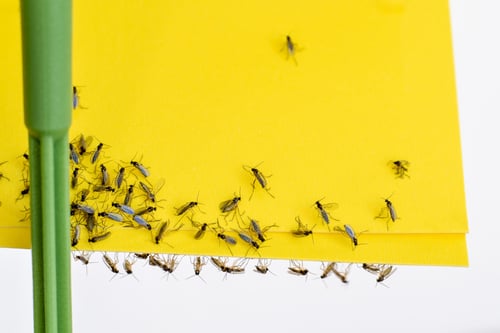
The physical ledger of data from passive traps turns a messy biological problem into a clear architectural audit.
When a manager stops looking at a pile of dead flies as a gross nuisance and starts viewing it as a directional sensor, they realize something critical: every catch on a glue board is a timestamped record of a structural or behavioral failure.
If the traps nearest the loading dock are consistently full while the interior units are empty, the data isn't telling them they need more kill power. It's telling them their dock seals are degraded or their staff is propping the door open for cigarette breaks.
This physical ledger forces a move from reactive spending to targeted infrastructure investment. It identifies the specific $500 repair that will eliminate a $2,000 monthly service headache.
Instead of blindly renewing a chemical contract every year, the owner starts making decisions based on entry-point pressure. Installing high-speed doors. Adjusting the building's exterior lighting to a different Kelvin range that doesn't pull insects toward the glass.
The business model stops being about fighting nature and becomes about managing the perimeter.
This stabilizes overhead costs and allows the owner to focus their mental capital on growth rather than the invisible chaos tax of a recurring infestation.
Why the Chemical Treadmill Keeps Spinning
If the data is so clear and the ROI is so obvious, why isn't every food facility and pest control business already making this switch?
The answer is a combination of misaligned incentives and the illusion of immediate action.
In the traditional pest control model, a service provider is often paid for the visit rather than the result. Their revenue is tied to a recurring labor hour and a consumable chemical cost. If they solve the problem permanently with a one-time $500 structural repair or a passive geometric trap, they effectively fire themselves from a $2,000 monthly contract.
This creates a conflict of interest where the industry is incentivized to treat the symptoms rather than cure the disease.
On the client side, the barrier is often budgetary silos. The Maintenance budget might cover the $500 door seal repair, but the Contracted Services budget covers the $2,000 monthly pest control bill. In many large corporations, these two departments rarely talk to each other.
A manager might be praised for staying under their maintenance budget while simultaneously hemorrhaging money on a recurring service that the maintenance repair would have rendered obsolete.
There's also a deep-seated psychological bias toward the active over the passive. To an owner or an inspector, a technician walking around with a pressurized tank looks like work. A silent, well-placed LED unit or a tapered entryway looks like nothing is happening.
This bias keeps the industry locked in a cycle of high-visibility, low-efficiency hustle.
The most sophisticated engineering is often the kind you don't have to touch once it's installed.
The Financial Forensic Audit
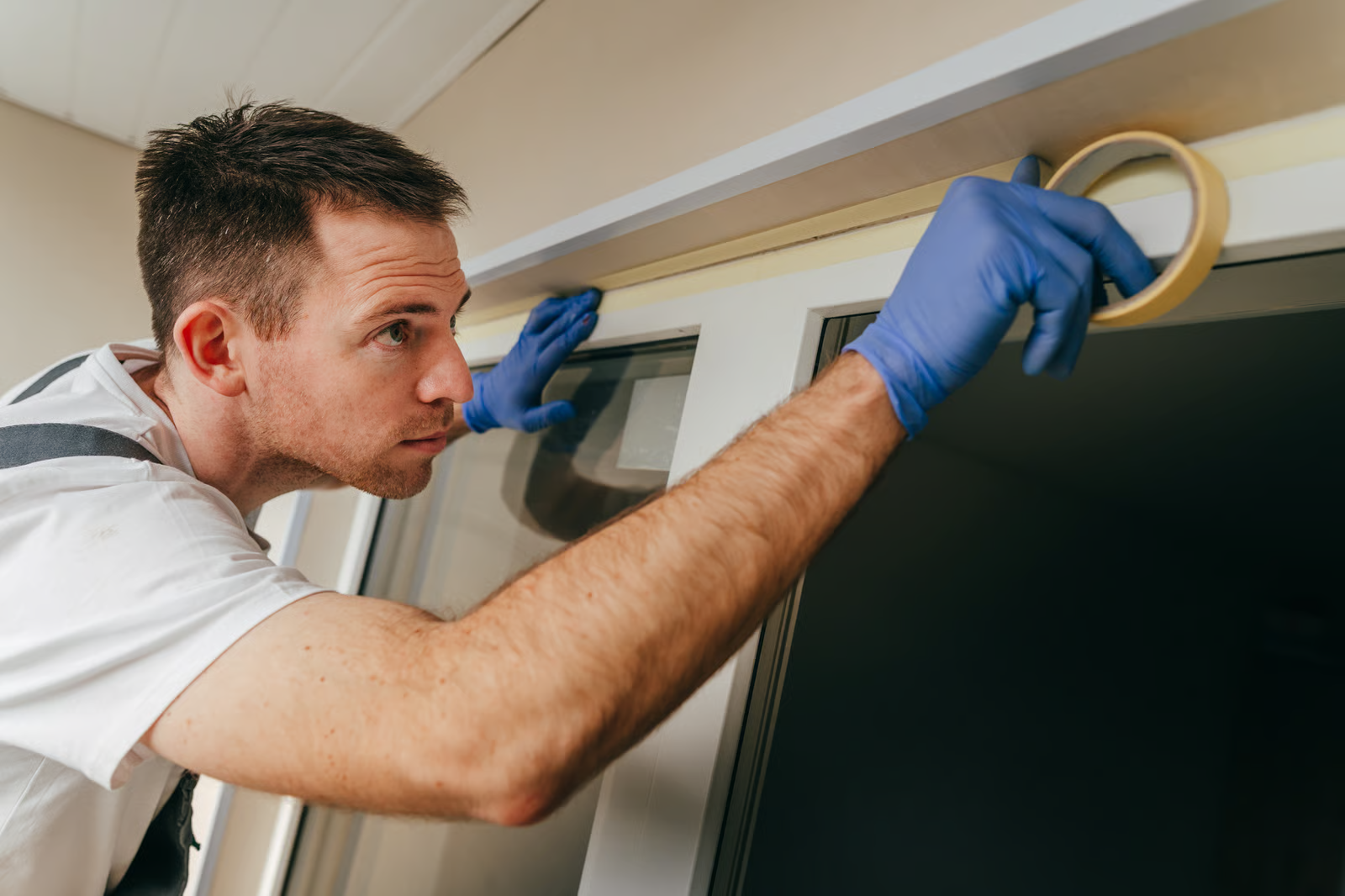
If you're a small pest control startup or side hustle that wants to build your business around passive traps instead of chemicals, the first conversation with a potential client needs to be different.
Don't walk in and ask, "Where are the bugs?" That triggers the hunter response.
Instead, ask: "Show me the invoices for the last six months of sprays, and then show me the door seals."
You break the conditioning by immediately pointing out the gap in the armor that the expensive chemical provider has ignored for years.
You say to the owner: "Your current provider is charging you $2,000 a month to kill the flies that their own neglect is letting in. They are profiting from your facility's structural gaps. My business model is to find the $500 permanent fix that makes my recurring service nearly invisible because the building itself will do 90% of the work."
This conversation reframes you not as a pest guy, but as a Facility Efficiency Consultant.
You move the goalposts from activity to exclusion. You explain that while the other guy is selling a temporary chemical fog, you're selling Recovered Mental Capital.
"I don't want to be the guy you see every Tuesday morning with a respirator. I want to be the partner who ensures you never have to think about a health inspector's clipboard again because we've baked the defense into your geometry."
You aren't just selling a trap. You're selling an end to the chaos tax and the beginning of a system that works while the owner sleeps.
The Moment the Illusion Collapses

When you're that startup walking into a facility for the first time, and you see those structural gaps the chemical company has been ignoring for years, you don't point at the bugs.
You point at the daylight pouring through their infrastructure.
Walk them over to a loading dock or a side exit during high noon. Kill the interior lights. Then ask one devastatingly simple question:
"If I can see the parking lot through your closed door, why is your current pest provider charging you to spray the inside of it?"
This observation instantly transforms the gap from a maintenance fluke into a gaping financial leak that their current technician has walked past every single month.
It exposes that the chemical company isn't just missing the hole. They're essentially using it as a funnel to ensure their next $2,000 invoice is necessary.
When you show the owner that a $50 door sweep or a bead of industrial sealant would do more for their facility than a hundred gallons of pesticide, the effort equals efficacy illusion shatters.
You aren't just selling a passive trap at that point. You're exposing a systemic conflict of interest where the pro they trust is actually profiting from the very entry points they should be flagging.
The moment they see that sliver of light, they stop seeing a pest guy and start seeing a business partner who is finally willing to close the door on the chaos tax for good.
From Firefighting to Precision

Six months after making the switch, something deeper shifts.
Owners move from a culture of firefighting to a culture of precision. They realize that the chaos they accepted as just part of the business was actually a choice.
When they stop reacting to the crisis of the day—whether it's a fly in the kitchen or a failed inspection—that calm starts to bleed into every other department.
They stop looking for hard workers who can scramble to fix a mess and start looking for system thinkers who can prevent the mess from happening in the first place.
The owner begins to see that the same logic that fixed their pest problem applies to their labor turnover, their supply chain, and their equipment maintenance.
A $500 repair at the door was worth more than a $2,000 monthly spray because the repair is a permanent asset while the spray is a recurring liability.
Six months in, they aren't just running a cleaner facility. They're running a more profitable one because they've reclaimed the mental bandwidth they used to spend on the chaos tax.
They finally understand that the most sophisticated way to run a business isn't to work the hardest, but to build a system that is too simple to be stupid.
One that allows them to sleep soundly while the building's own geometry holds the line.
The Lesson for Every Entrepreneur

This isn't just about pest control.
The shift from chemical sprays to passive structural traps mirrors a fundamental principle that applies to every business: recurring problems often signal misaligned incentives, not insufficient effort.
When you find yourself on a treadmill—paying more to get worse results—the answer isn't to run faster. The answer is to step off the treadmill and ask who's profiting from keeping you on it.
The most effective solutions are often the ones that feel like you're doing less, not more. Systems that work while you sleep. Infrastructure that solves problems before they start. Geometry that does the thinking for you.
At Revival of Revenue, we believe in disrupting the broken systems that keep side hustles, startups, and small businesses trapped in cycles of expensive, ineffective solutions.
We help you build businesses that don't require constant firefighting. We help you identify the $500 repair that eliminates the $2,000 monthly headache. We help you move from reactive spending to targeted infrastructure investment.
Because the most sophisticated way to run a business isn't to work the hardest.
It's to build a system that is too simple to be stupid.
