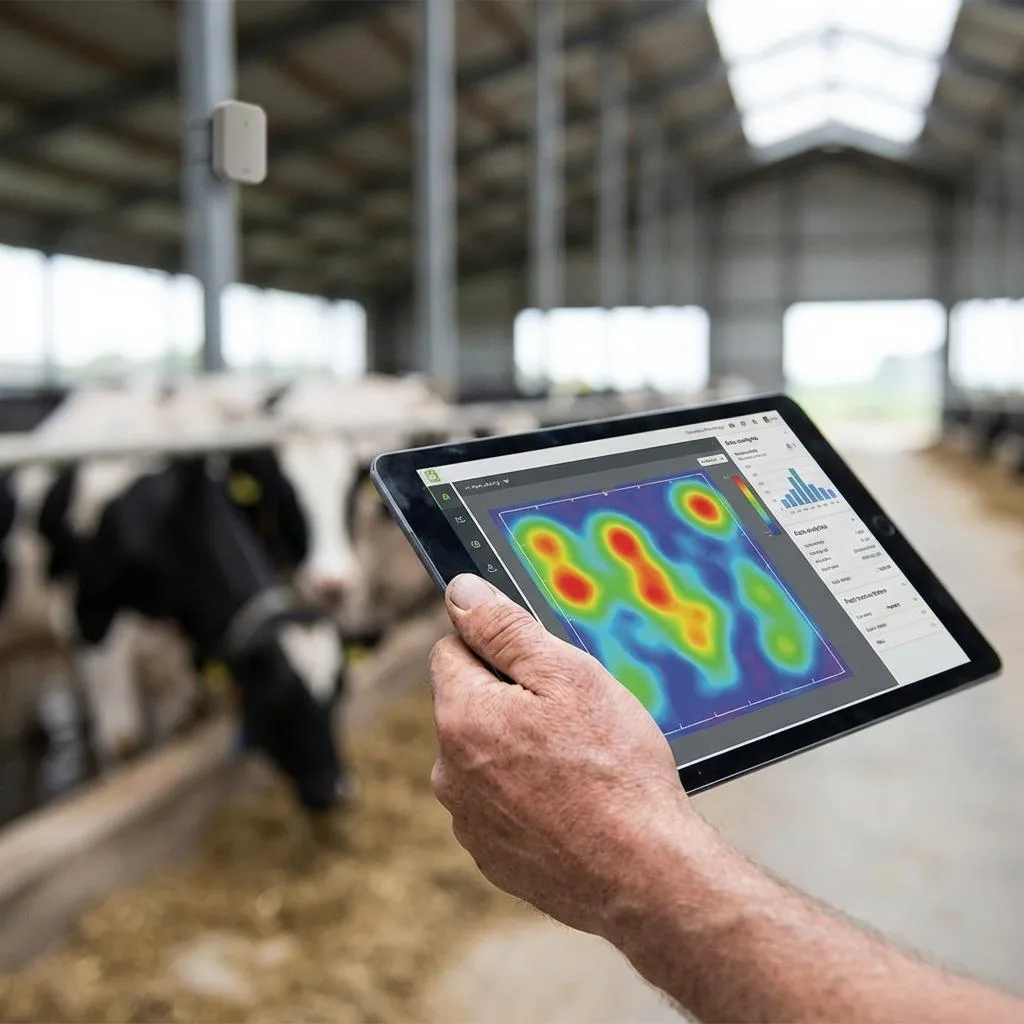
How AI Pest Detection Turns Prevention Into Profit
How AI Pest Detection Turns Prevention Into Profit

Most pest control businesses operate the same way they did 30 years ago. Wait for the phone to ring. Show up. Spray. Invoice. Repeat.
The problem? By the time you see flies, you're already losing money.
We've studied the numbers across dairy operations, food processing facilities, and agricultural businesses. The hidden costs of reactive pest control add up to 20 to 40 percent more than proactive approaches. That's not a small margin. That's the difference between profit and struggling to stay afloat.
AI-powered pest detection changes the equation entirely. Early detection means targeted intervention. Targeted intervention means lower costs, healthier operations, and predictable revenue streams for entrepreneurs who understand the opportunity.
Here's what the data shows—and how small businesses can capture this market.
The Invisible Revenue Drain of Reactive Pest Control

When flies spike in a dairy barn, staff scramble. They fog the space, burn through chemicals, and divert time from feeding, cleaning, and maintenance. Each treatment feels manageable—a few hundred dollars here and there.
But the real cost shows up somewhere else entirely.
Stressed cows produce less milk. Research shows fly burdens reduce milk production by 5 to 30 percent depending on infestation levels. In practical terms, that's one to two pounds less per cow per day. Multiply that across a herd over a season, and you're looking at thousands of dollars in lost revenue that never appears as a line item on the balance sheet.
National losses from stable flies alone hit $2.2 billion per year across U.S. cattle industries, with $360 million annually in dairy operations. These aren't abstract numbers. They represent real operations losing real income because they're treating symptoms instead of preventing problems.
The traditional approach creates a cycle: pests multiply, costs spike, productivity drops, and the business pays repeatedly for the same problem.
What AI Detection Actually Does

AI pest detection systems use cameras, sensors, and machine learning algorithms to identify pest patterns before human eyes can spot them. The technology tracks movement, counts individuals, and predicts breeding cycles based on environmental conditions.
The accuracy is remarkable. Current systems achieve 97.5 to 98.6 percent accuracy in detecting, recognizing, and counting pests. Some models operate on devices as compact as a Raspberry Pi, with processing times as low as 16 milliseconds and costs under $100 for the hardware.
Here's what that means in practice:
Early intervention: Detection happens days or weeks before visible infestations
Targeted treatment: Spray only where pests are present, not entire facilities
Measurable results: Real-time data shows exactly what's working
Cost reduction: Chemical use drops 50 to 70 percent compared to blanket applications
In field trials, AI-guided applications reduced fly counts from 35-40 flies per cow down to 10-15. Traditional methods barely moved the needle. The difference wasn't just visible—it showed up in milk production, with treated herds producing 1.5 to 2 pounds more milk per cow per day.
The technology discovers pest activity multiple times before weekly manual inspections would catch the same issues. That head start makes all the difference.
The Business Model for Small Operators

You don't need massive capital to enter this market. The barrier to entry is knowledge and credibility, not technology budgets.
Small pest control entrepreneurs position AI detection as a value-added service rather than a tech rollout. The business model centers on recurring revenue through monitoring, reporting, and targeted treatments.
Here's how it works:
Offer tiered packages. Basic monitoring alerts clients to pest hotspots. Premium tiers include treatment recommendations, automated reporting, and integration with existing equipment. Revenue comes from monthly service fees, not one-time spray calls.
Entry costs stay lean. Off-the-shelf sensors, cameras, and AI software subscriptions replace custom-built systems. Total startup investment for monitoring equipment runs $500 to $1,500, with monthly software subscriptions adding another $50 to $200 depending on scale.
The ROI sells itself. Clients see reduced chemical costs, improved productivity, and documented results within a single season. That proof opens doors to additional customers.
Your First Pilot Program

Building credibility starts with demonstrable results. Here's your Monday morning action plan:
Find a small, local farm willing to run a pilot. Visit the operation. Observe current pest patterns. Take notes on hotspots, timing, and existing treatment methods.
Bring a simple monitoring setup. Cameras, sensors, or even systematic manual counts work for baseline data. Show the farmer exactly how you'll track results.
Set clear expectations. The goal is measuring improvements in pest control, chemical use, and productivity—not promising perfection from day one.
Collect baseline data over two to four weeks. Document fly counts, treatment frequency, chemical volumes, and any available productivity metrics like milk yield or crop damage assessments.
Implement targeted treatments based on what the data shows. Focus interventions where pests actually congregate instead of blanket applications.
Document everything meticulously. Photos, counts, dates, locations, treatment details, and outcome measurements. This documentation becomes your proof of concept for the next client.
When the pilot demonstrates measurable gains—lower pest counts, reduced chemical use, improved output—you have credibility. That data opens conversations with larger operations and different market segments.
The Family Safety Value Proposition

Flies transmit more than 65 diseases to humans, including typhoid fever, dysentery, cholera, and tuberculosis. When you reduce fly populations in agricultural settings, you're not just protecting livestock. You're protecting families living and working on those properties.
This dual benefit shifts the conversation entirely.
For operations where kids play near barns or pastures, parents see immediate practical value. Fewer pests mean lower risk of bites, contamination, and disease exposure. A cleaner, healthier environment for their families.
The emotional appeal goes beyond economics. "This saves me money" becomes "This protects my kids." That motivation drives commitment in ways pure ROI calculations never will.
Frame the technology as a tool that protects both the operation and the family. Show how early detection creates safer spaces for everyone on the property, not just the animals or crops.
This approach resonates because it touches something people care about every single day.
Untapped Markets with Premium Pricing Potential

Agriculture represents the obvious market, but the biggest opportunities exist in sectors most small businesses avoid: food processing facilities, hospitality operations, and high-density residential settings.
Food processing facilities face catastrophic costs from pest incidents. A single contamination event forces complete line stoppages for cleaning and inspection. Lost production runs $5,000 to $10,000 per day. Add regulatory fines, potential recalls, and reputation damage, and total costs easily exceed $50,000 for one incident.
Proactive AI detection costs $500 to $1,500 monthly for monitoring, reporting, and targeted treatment. Avoiding one major shutdown covers an entire year of service multiple times over.
The business case is undeniable. Spend a fraction of potential losses on prevention. Maintain operational continuity. Protect brand reputation.
Yet many entrepreneurs avoid these markets because they perceive regulatory hurdles, liability concerns, and specialized compliance requirements. That perceived barrier creates premium pricing opportunities for businesses that figure it out.
Hotels, restaurants, and healthcare facilities require consistent, effective pest control to maintain hygiene standards and regulatory compliance. Early detection prevents outbreaks before they become visible problems. Data-driven monitoring provides documentation that satisfies inspectors and protects against liability claims.
The global pest control market reached $27.6 billion in 2025, with projections climbing to $44.3 billion by 2035. AI-powered monitoring systems drive this growth as commercial establishments recognize the value of proactive approaches.
Small businesses that establish expertise now position themselves as trusted advisors before the market becomes crowded.
What Clients Actually Pay For

Here's what most entrepreneurs miss: AI pest detection isn't about selling sensors or software. Success comes from using real-time data to anticipate problems, target interventions, and demonstrate measurable results.
Clients pay for certainty, not gadgets.
Farmers, food processors, and facility managers want confidence that pest issues won't spiral into expensive crises. They want documented proof that treatments work. They want predictable costs instead of emergency service calls.
The business model transforms reactive, wasteful approaches into proactive, efficient operations. Focus on measurable outcomes, cost savings, and safety. That value proposition scales across agriculture, food processing, hospitality, and residential markets.
Combine AI data with advisory services. Help clients interpret results and make actionable decisions. This creates recurring revenue and deepens relationships beyond transactional service calls.
The Market Timing Advantage

Adoption accelerates not because AI is new, but because operational efficiency and sustainability have become non-negotiable across industries.
A common misconception holds that AI pest detection only works for large-scale operations or high-tech facilities. The reality? Even small operators benefit immediately from early detection, targeted treatment, and measurable ROI.
The technology evolves rapidly. Entering now allows small businesses to establish credibility and expertise while competition remains limited. Early movers become recognized authorities rather than late-arriving service providers.
Research shows up to 40 percent of global crop production is lost to pests annually. Plant diseases cost the world economy over $220 billion. Pests add approximately $70 billion more. That represents a massive $65 billion opportunity in agriculture alone by improving foundational areas like pest management.
The market exists. The technology is accessible. The barrier to entry favors knowledge and execution over capital.
Your Revenue Map Forward

At Revival of Revenue, we help entrepreneurs identify emerging opportunities where technology meets real-world problems. AI pest detection represents exactly that intersection.
The path forward is clear:
Start with pilot programs. Secure one small client. Document baseline data. Implement targeted monitoring. Measure results. Use that proof to build credibility.
Focus on outcomes, not technology. Clients care about reduced costs, improved productivity, and safety. Lead with those benefits. The AI is simply the tool that delivers them.
Build recurring revenue models. Tiered service packages create predictable income streams. Monthly monitoring fees provide stability that one-time service calls never will.
Expand into underserved markets. Food processing, hospitality, and commercial facilities offer premium pricing opportunities for businesses that understand compliance requirements.
Position yourself as an advisor. Data interpretation and decision support create deeper client relationships and justify higher service fees.
The entrepreneurs who succeed in this space understand they're not selling pest control. They're selling certainty, efficiency, and protection for what clients value most—whether that's livestock, crops, facilities, or families.
The maze of traditional pest control keeps most businesses stuck in reactive cycles, burning cash on repeated treatments while problems multiply. The matrix of AI-powered detection provides a clear roadmap to prevention, profit, and sustainable growth.
You choose which path to take.
